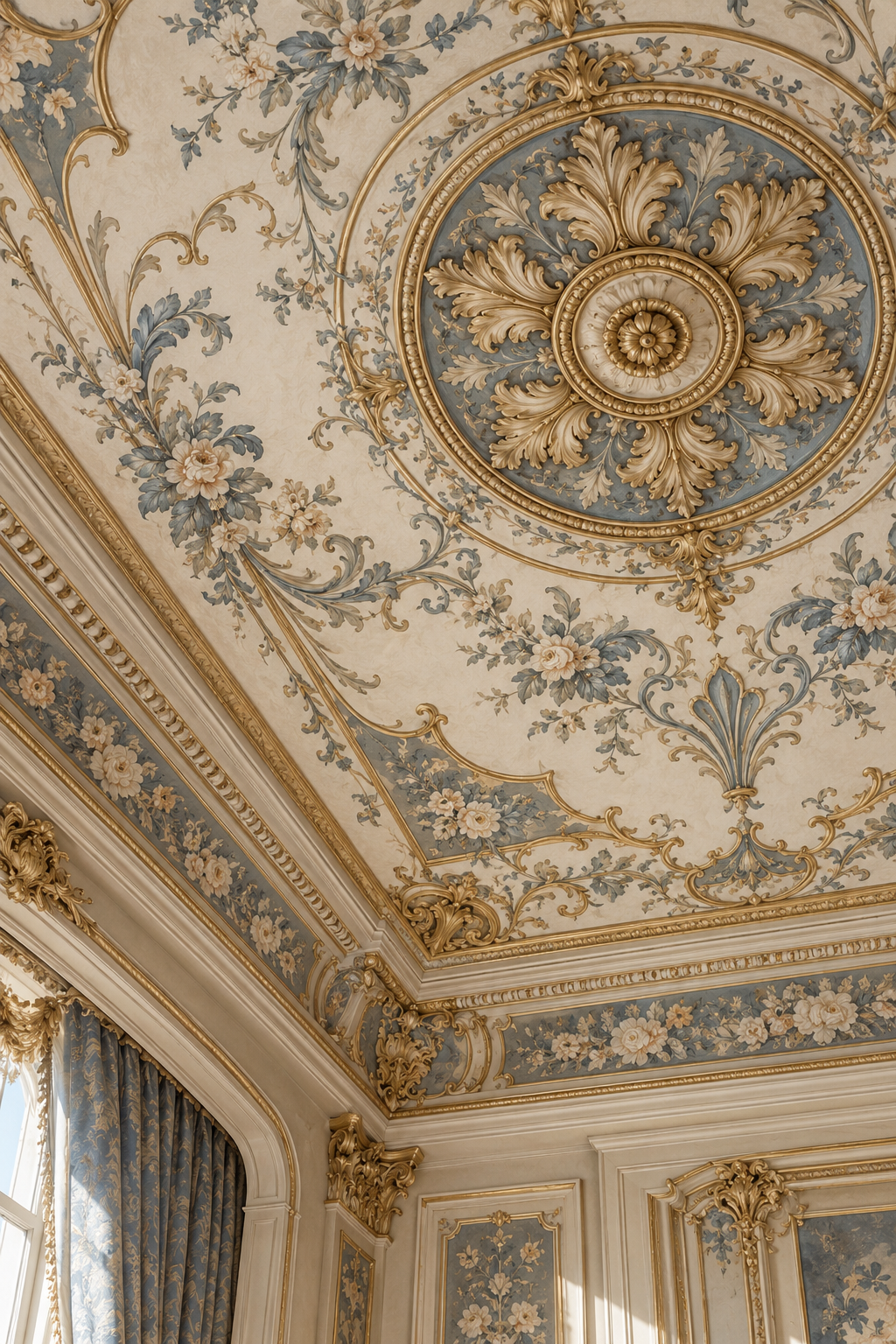
A motif family is a starting point
Türkiye’nin Ustaları lists geometric and vegetal interlace, hatayi, rumi and scrolling branches among decorative painting examples. These names help describe a design language; they do not mean that every motif suits every setting. Explain why a reference appeals to you: a quieter composition, a stronger centre or a more elaborate border.
Consider scale and viewing distance together
Our design recommendation is to look beyond a close-up image on a screen. A motif around a small window and one on a high dome raise different layout questions. Show the relevant area and dimensions on approval drawings. Where appropriate, discuss line and space through a full-size detail rather than making enlargement the only design decision.
Relate borders to the central field
A central field and its surrounding border may compete for attention. Identifying the intended focal area helps compare options. Corners, openings, mouldings and junctions can define the design boundaries. Consider colours through their distribution across the composition, not only as separate swatches. These are aesthetic choices; there is no universal compulsory colour ratio or motif density.
Use one coherent approval record
Keep drawings, colour references and samples under a consistent revision. A client may prefer the motif from one image and the colours from another, but the resulting combination needs to appear clearly in the current design. Record the approval date and areas covered. Concept images remain visual references; they are not completed applications or approved samples.
Quick project checklist
- Is the preferred feature of each reference described?
- Is the application scale defined?
- Are corners and junctions represented?
- Do colour, drawing and sample records share a revision?
Further reading & sources
Source links provide background information; project advice is presented separately.
This article provides general information. Material, technique and scope depend on project review; it is not an installation specification.
Let’s define your project.
Explore design approaches or prepare a quotation enquiry.